Pocket Park Céramique
Integrated Design Vision
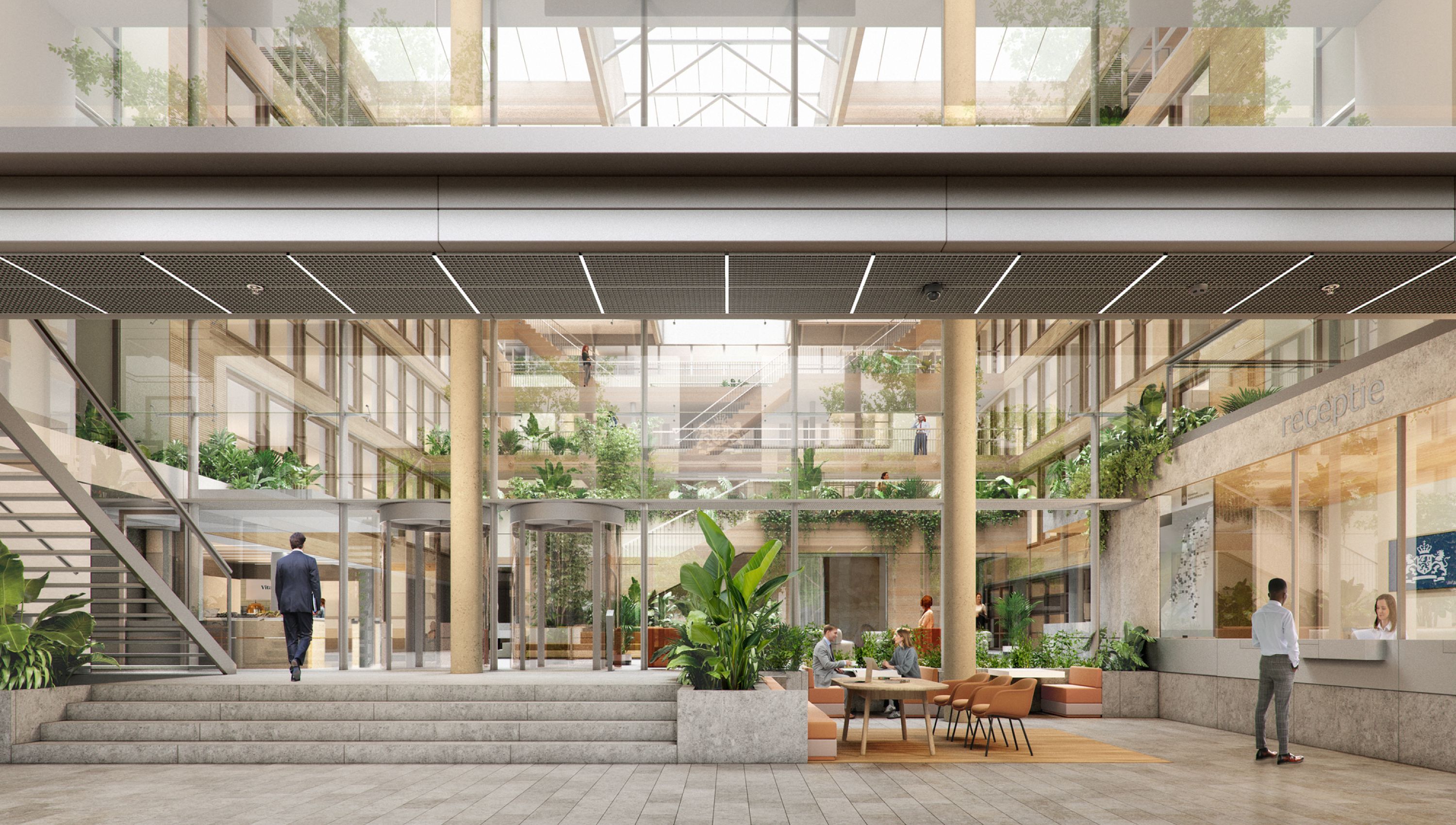
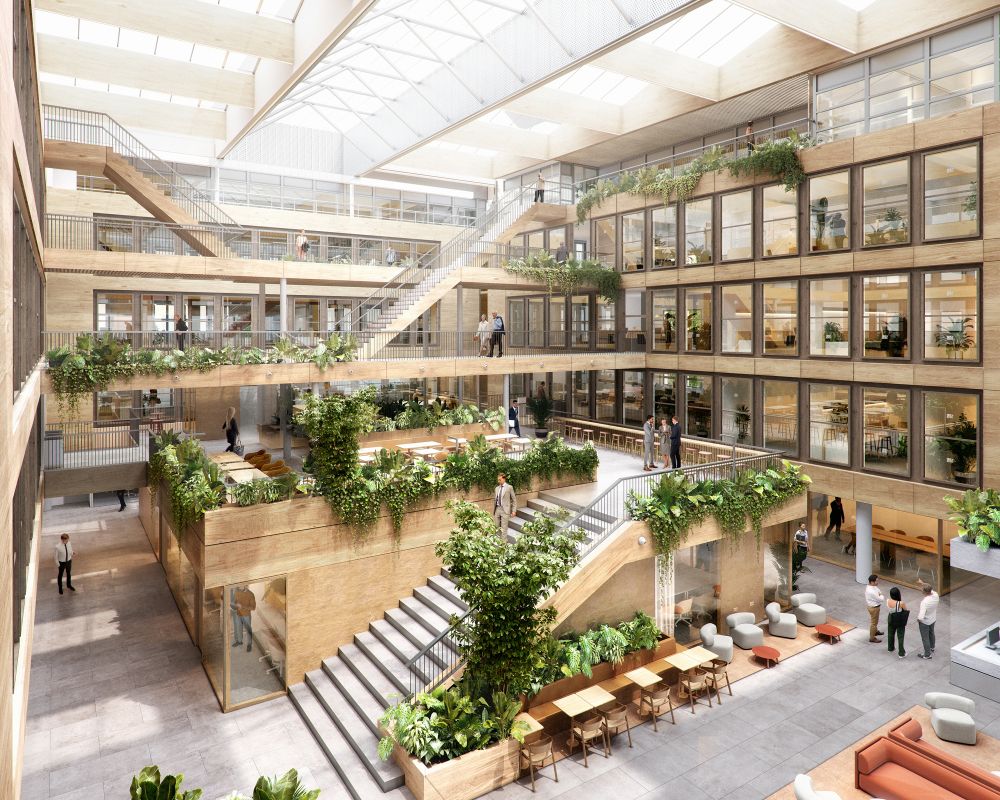
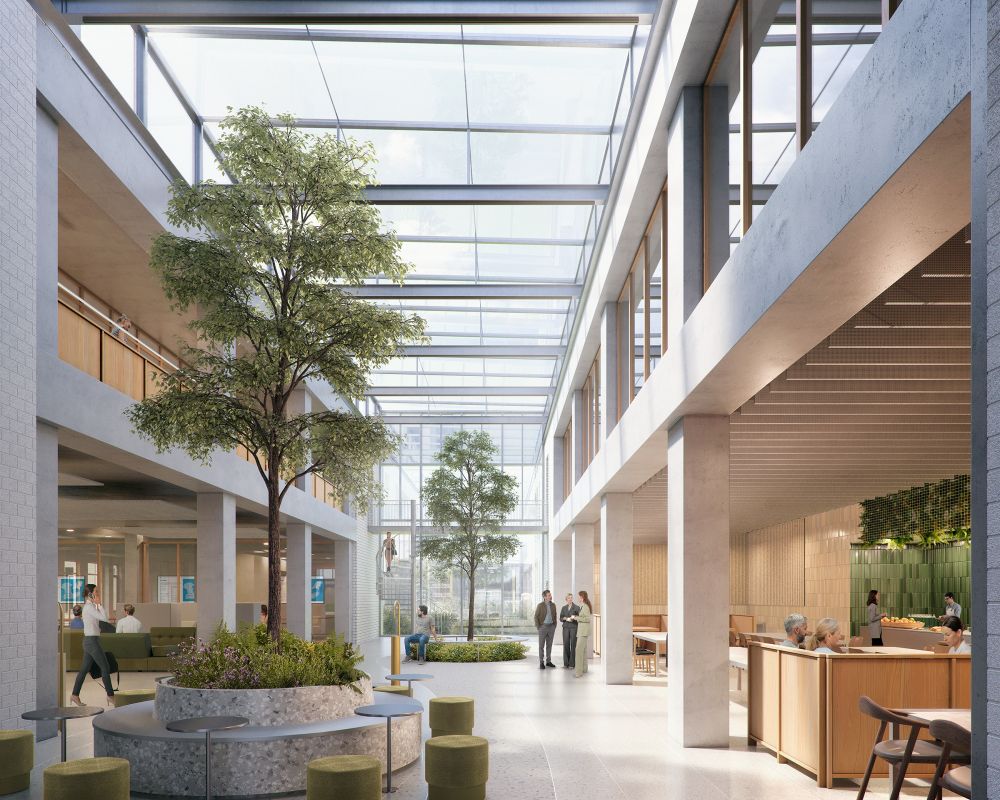
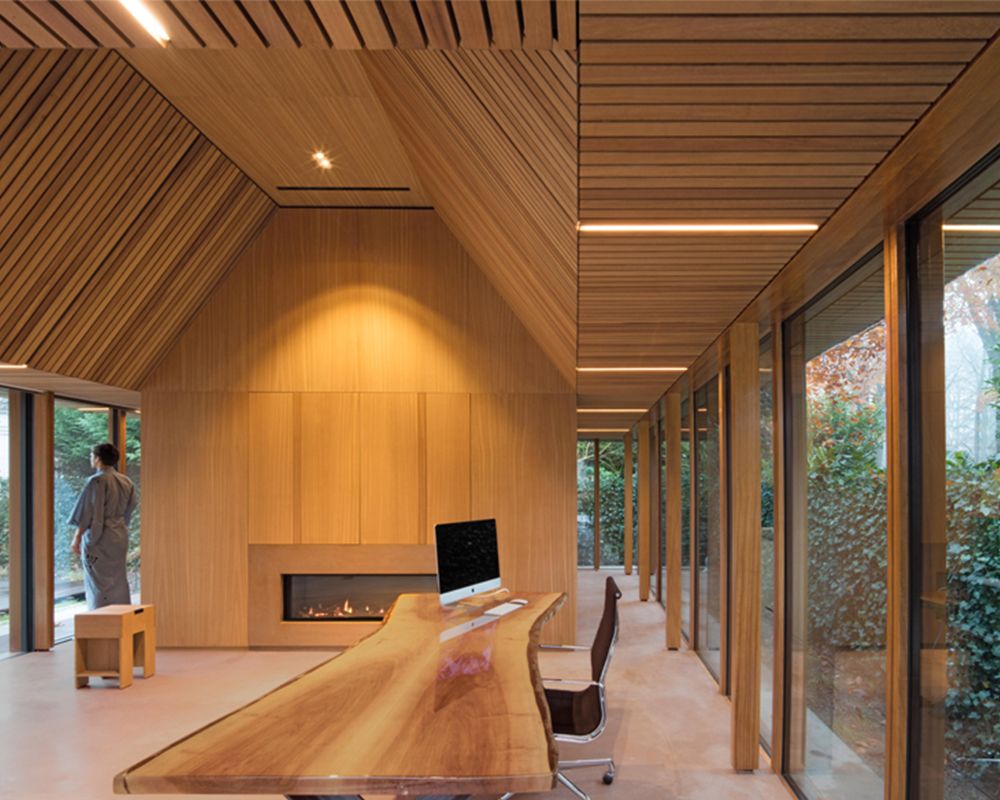
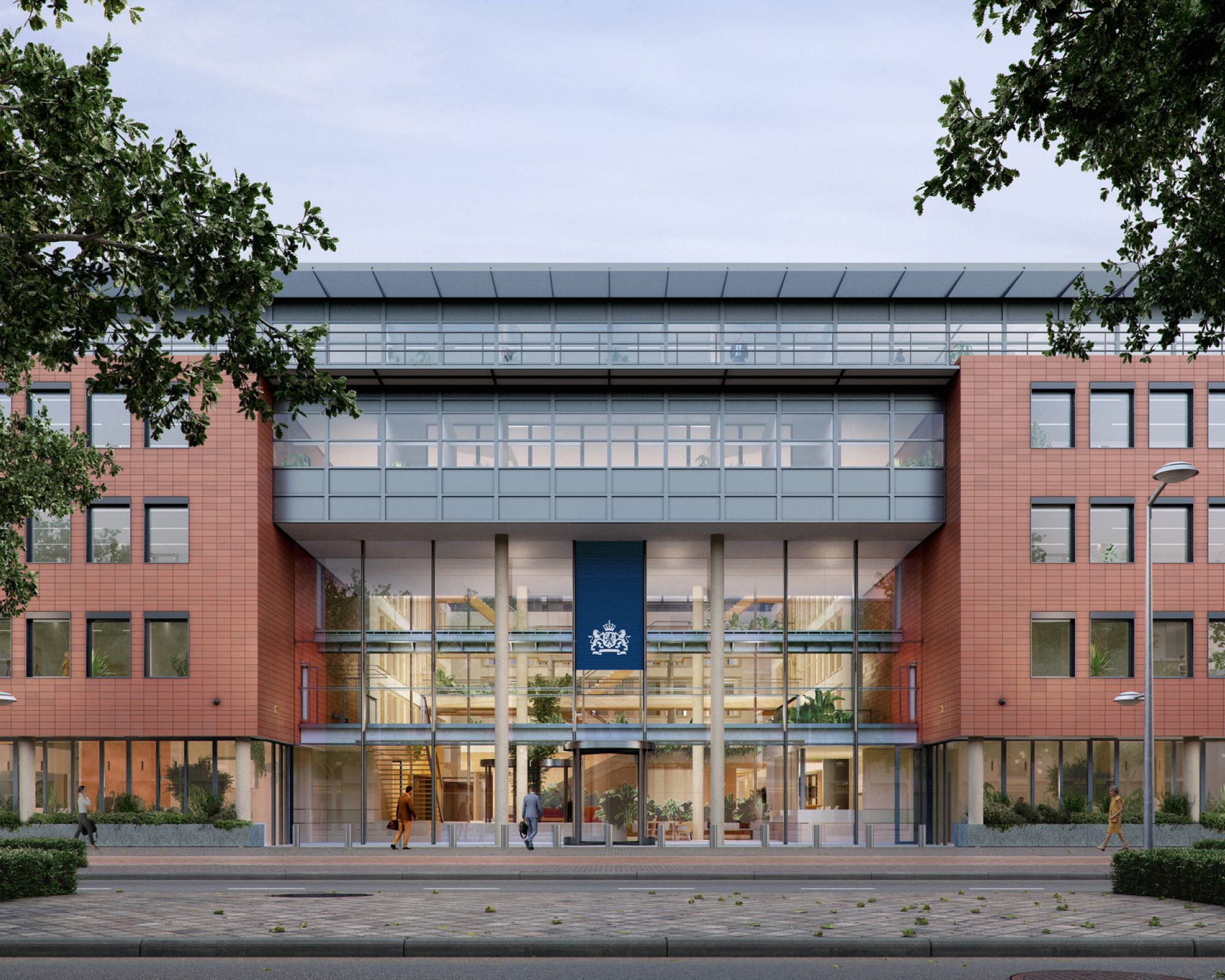
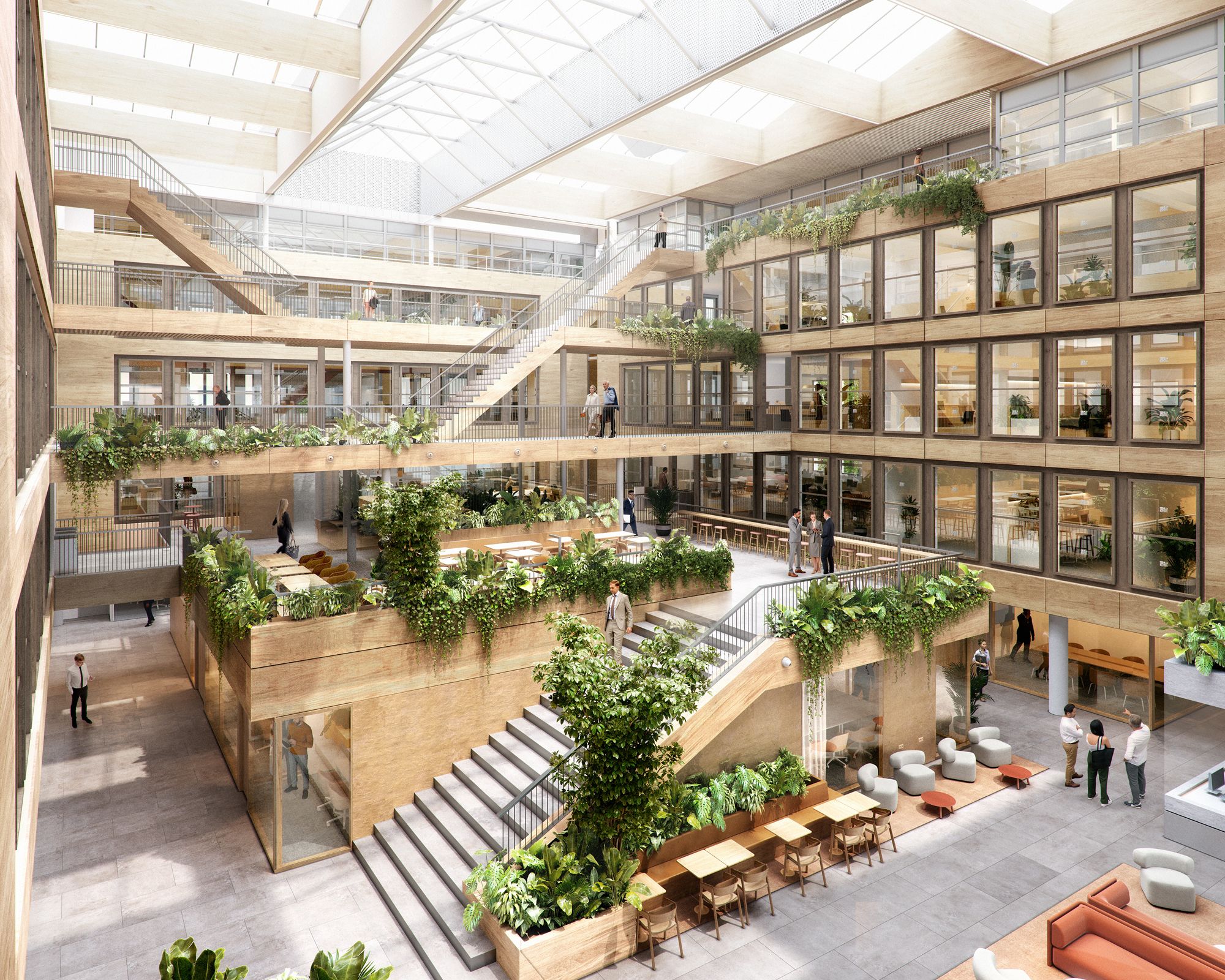
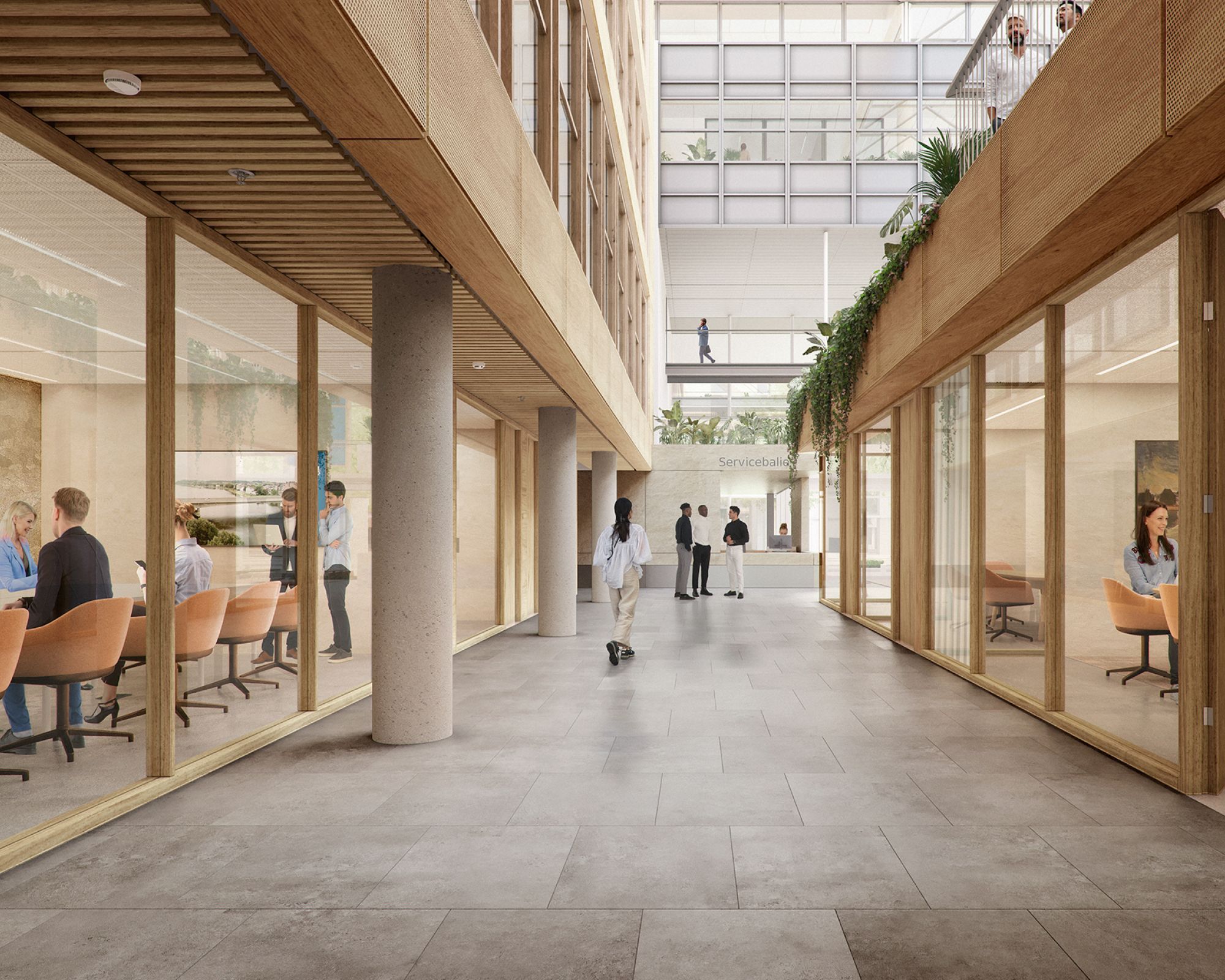
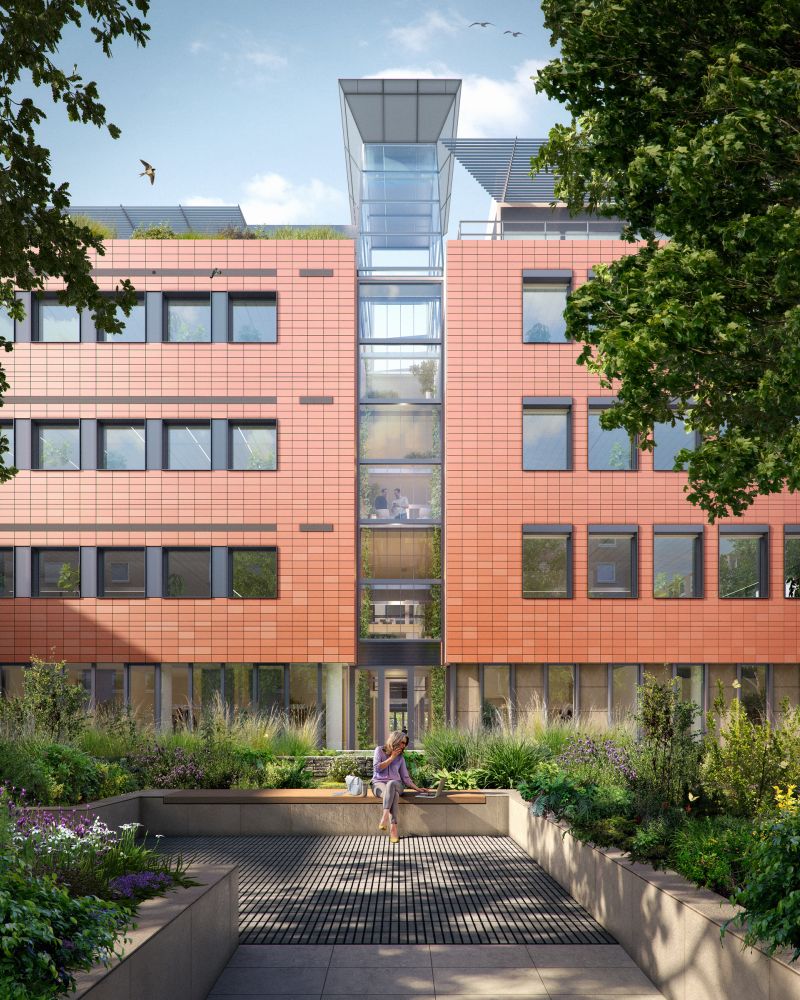
The project combines a network of green pocket parks with a radically circular transformation of the existing building. Green spaces connect the surrounding urban context with the interior atrium and rooftop gardens, creating places for meeting, relaxation, and informal work while enhancing biodiversity and the indoor climate. At the same time, the design prioritizes maximum reuse of existing materials and structures, complemented by new interventions executed in biobased materials. The building’s structural logic enables flexible and sustainable reconfiguration of the work floors, transforming approximately 16,000 m² of office space into an adaptive, inspiring, and healthy working environment, scheduled for completion in 2028.
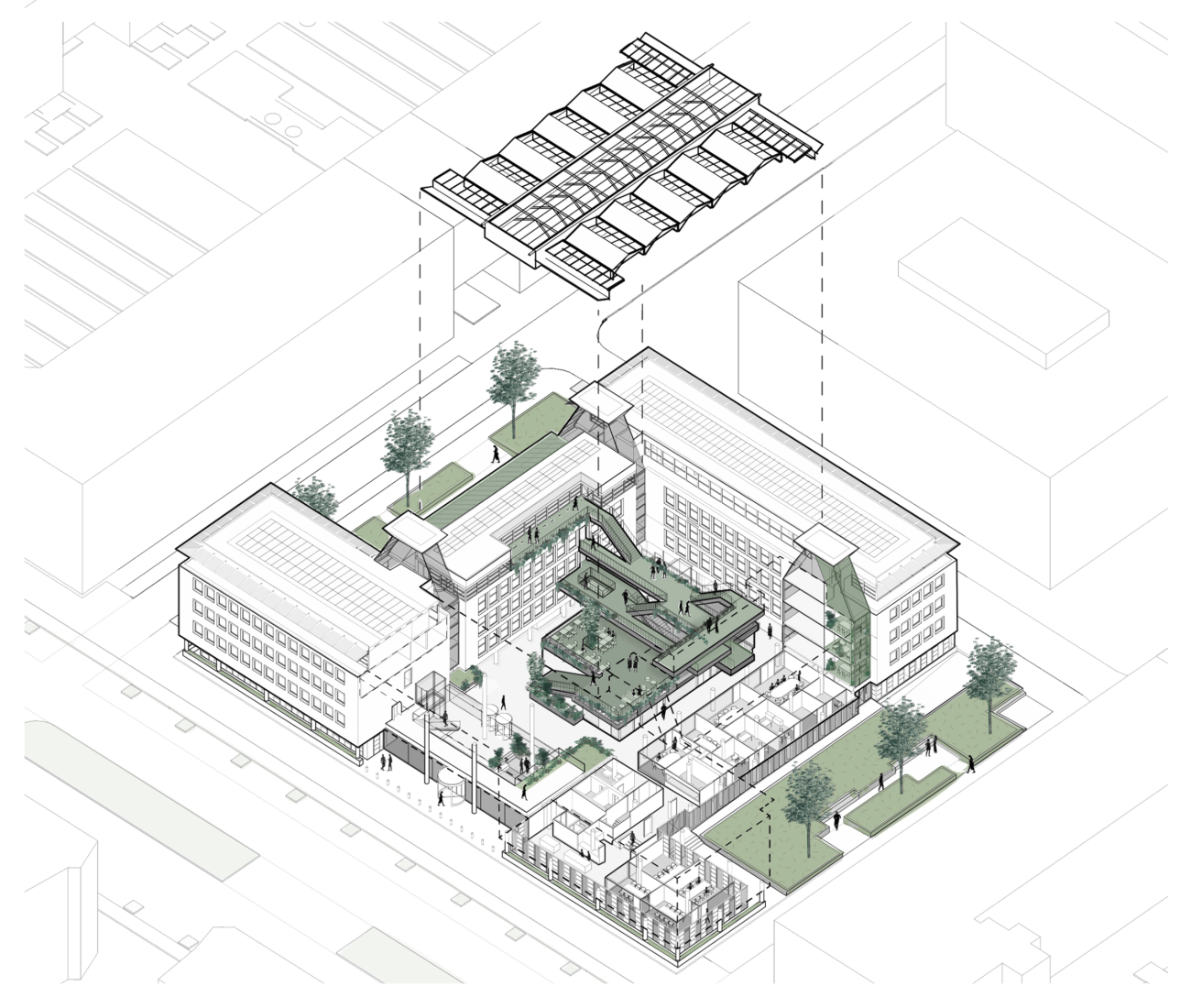
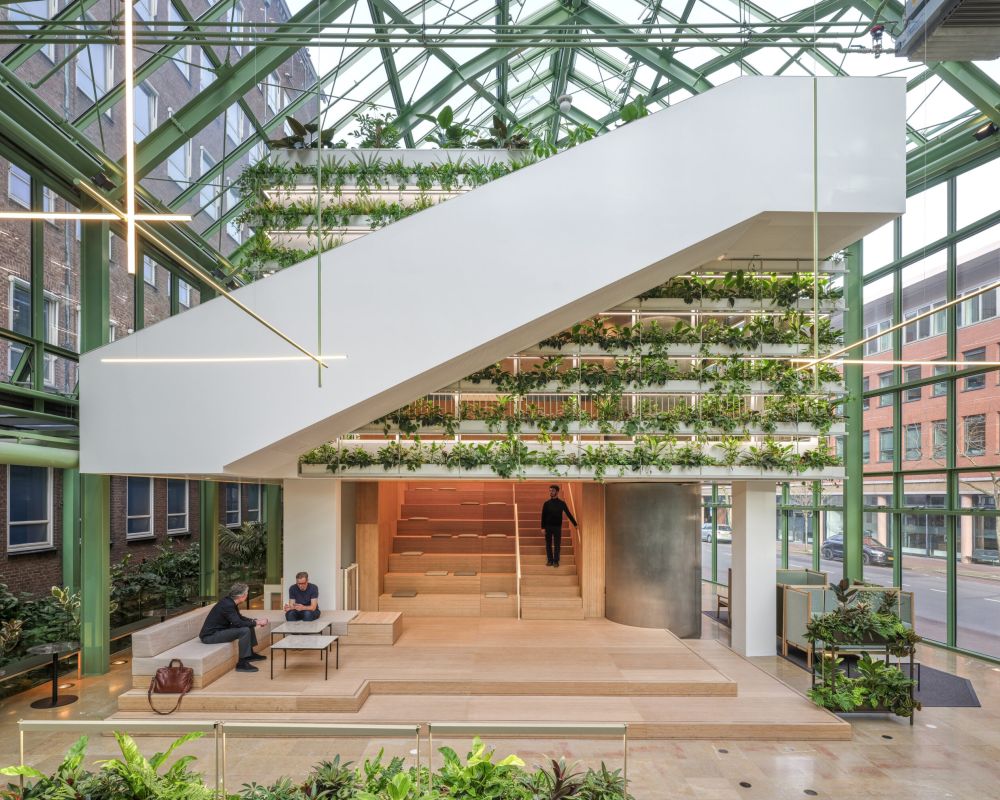
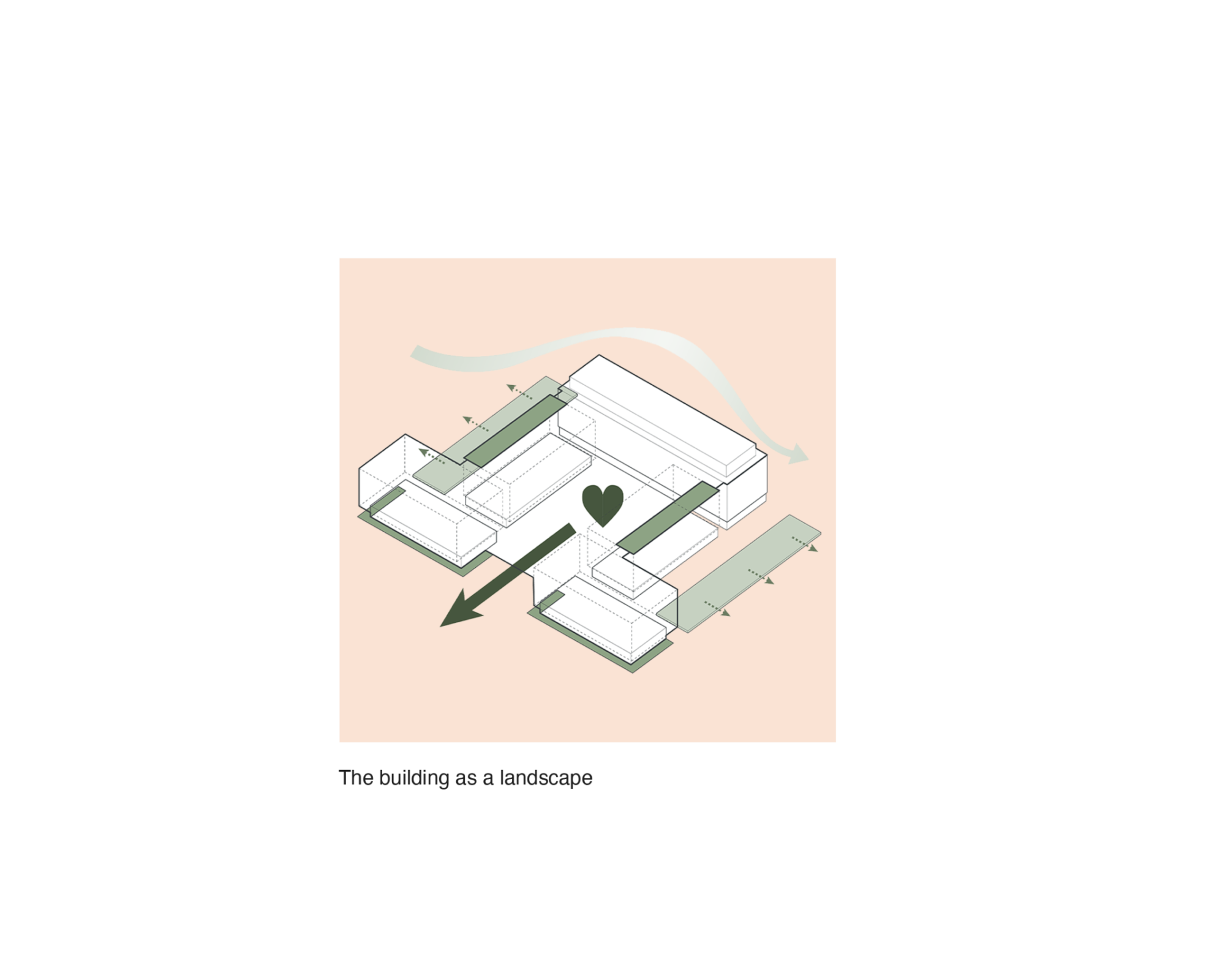
Greenery forms the core of the architectural concept. Pocket parks are integrated throughout the building, across multiple levels, within the atrium, along circulation routes, and on the rooftops, creating a continuous green landscape. These planted spaces support biodiversity, improve the indoor climate, and provide areas for rest, informal meetings, and everyday interaction, transforming the carré-shaped building designed by Hubert-Jan Henket in 1998 into a lively and socially engaging workplace.