Entrance Pieter Baan Centrum
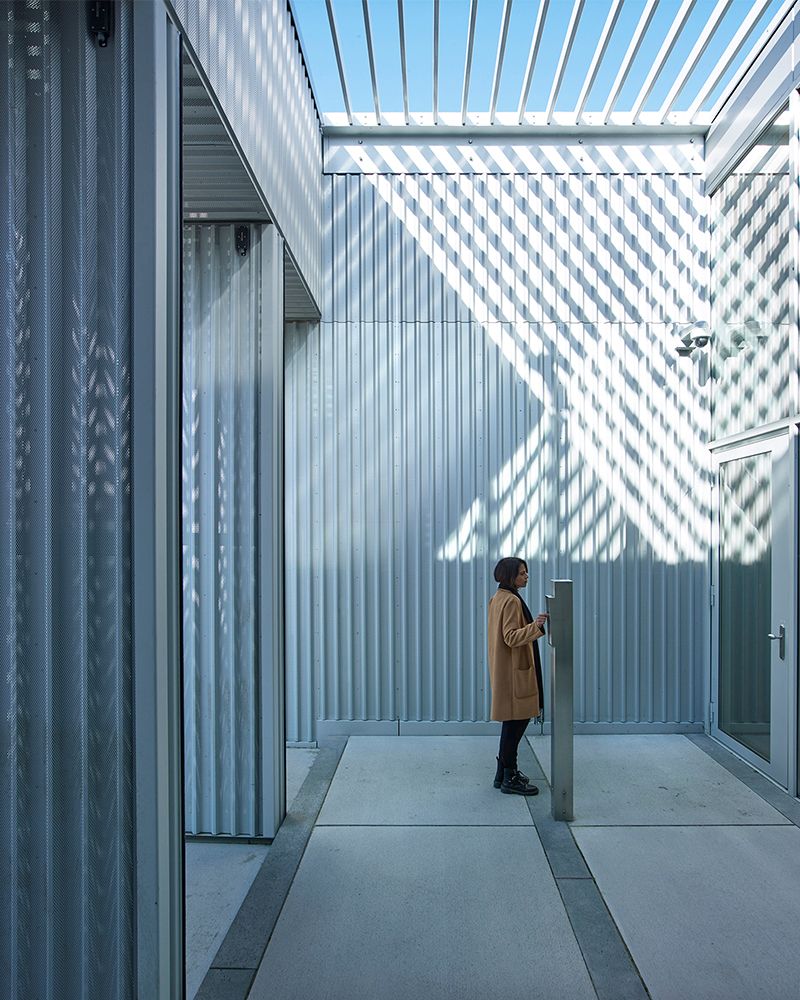
An architecture of transition and serenity
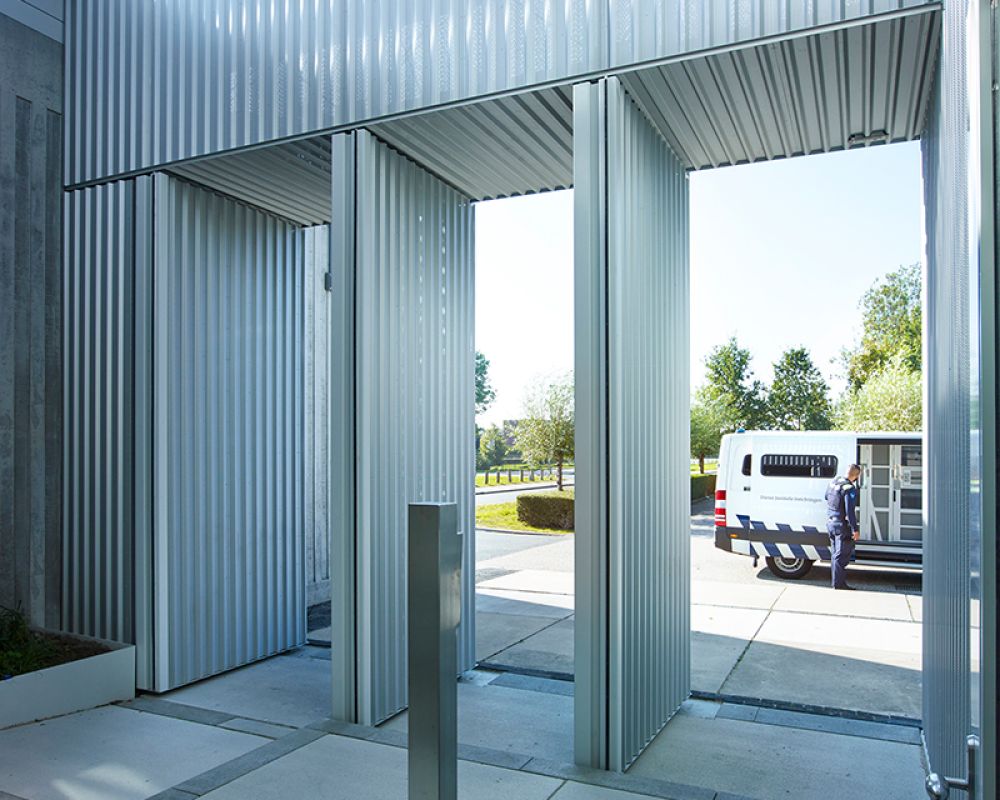
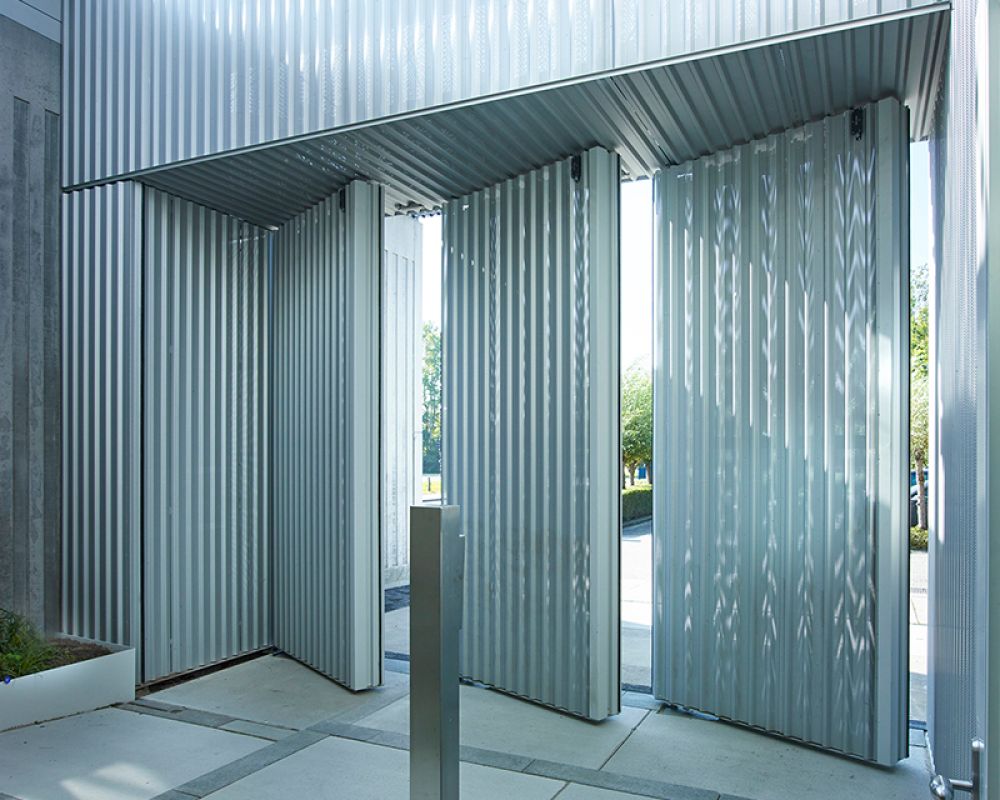
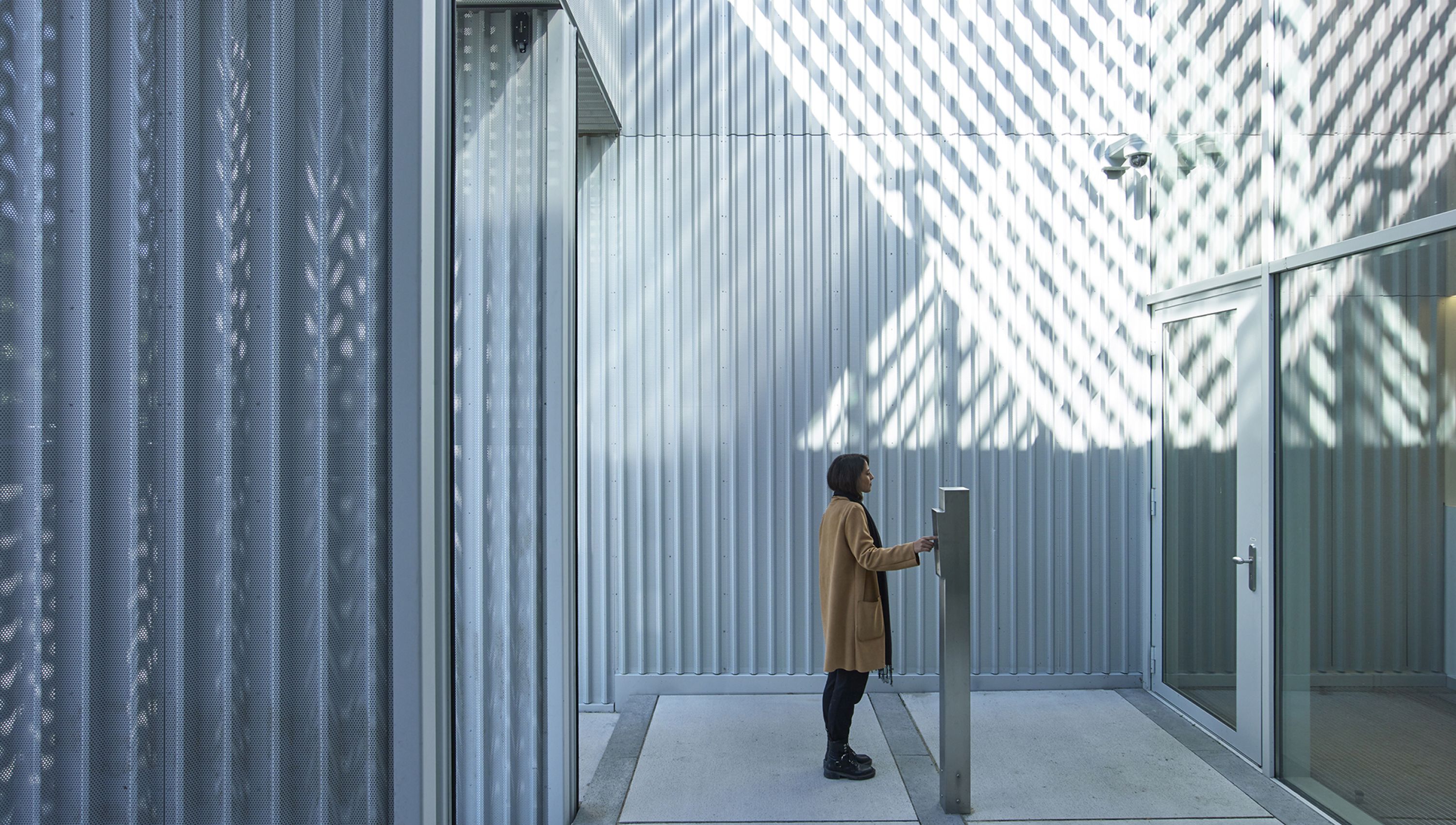
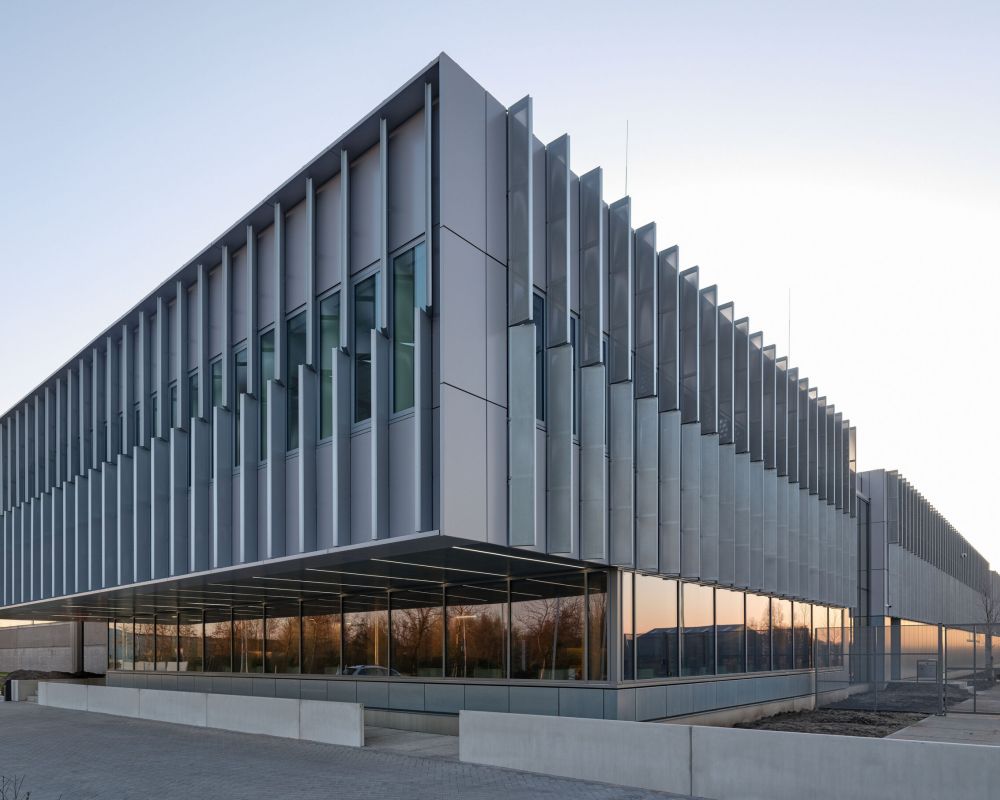
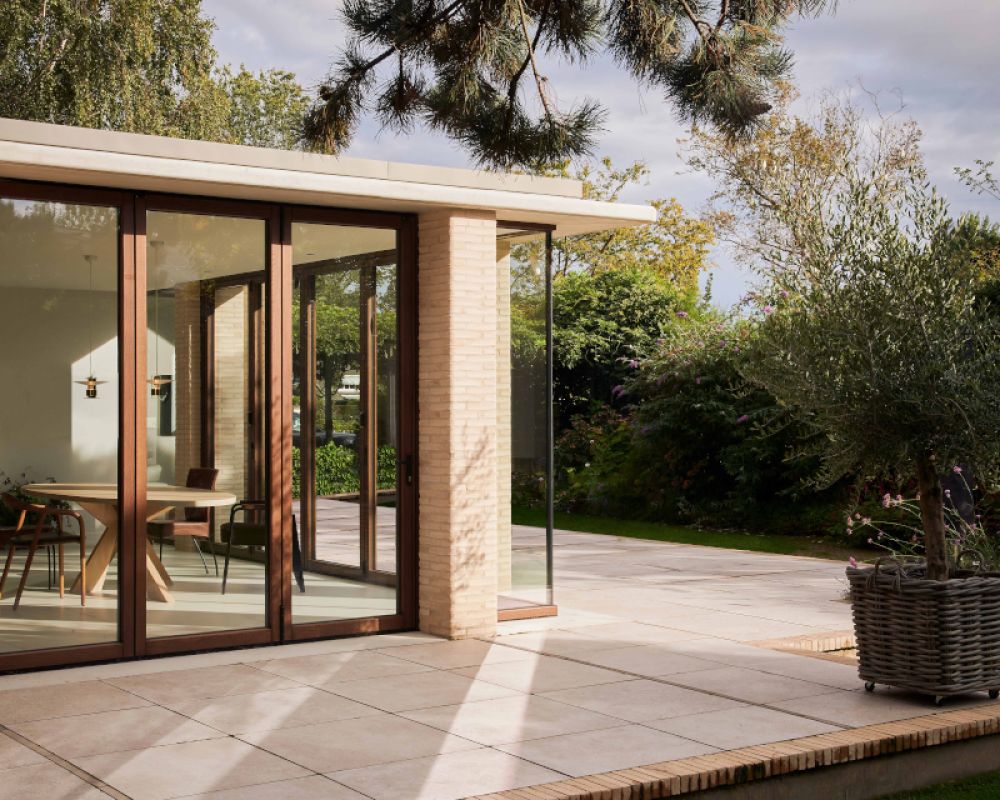
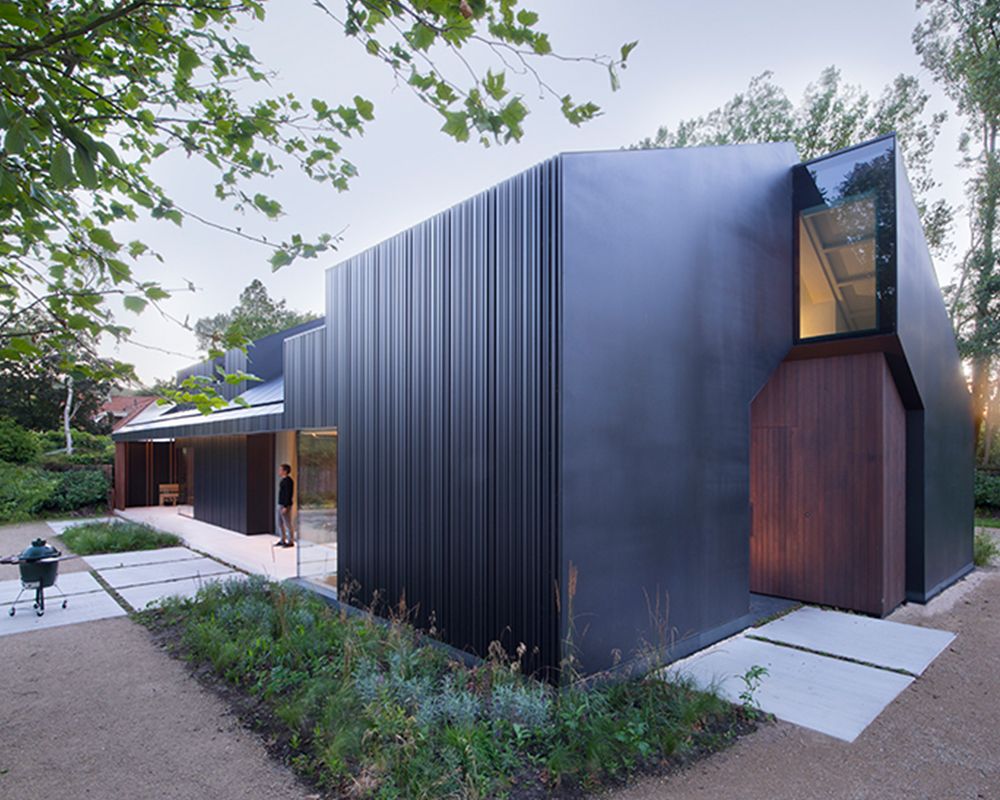
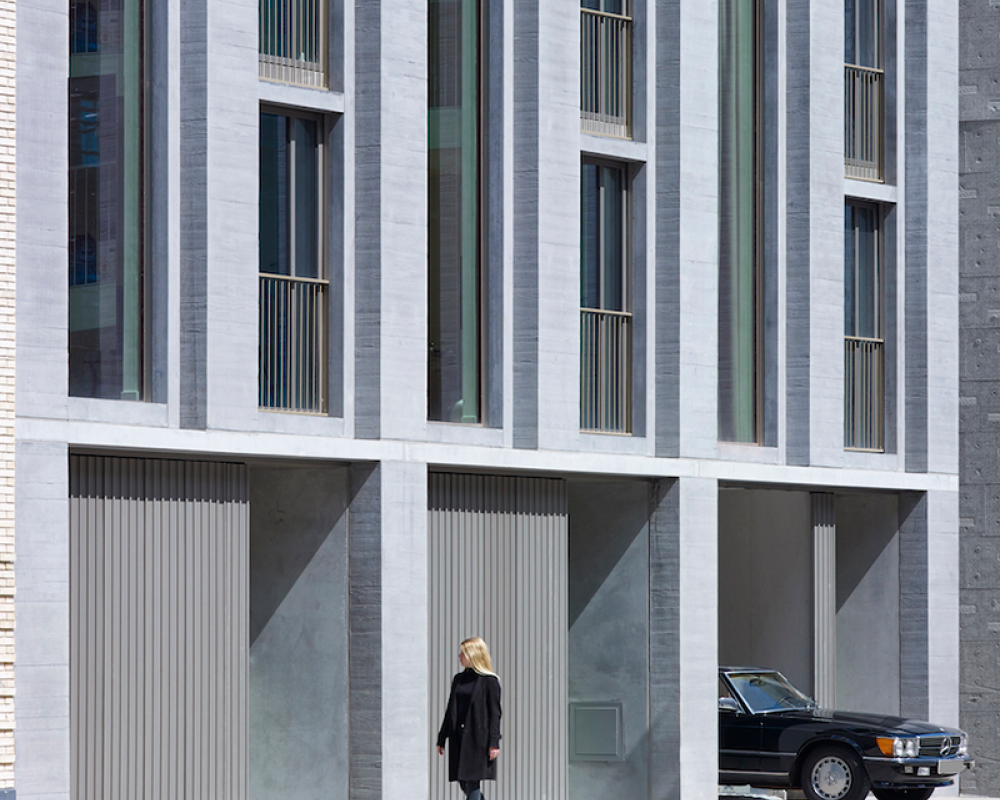
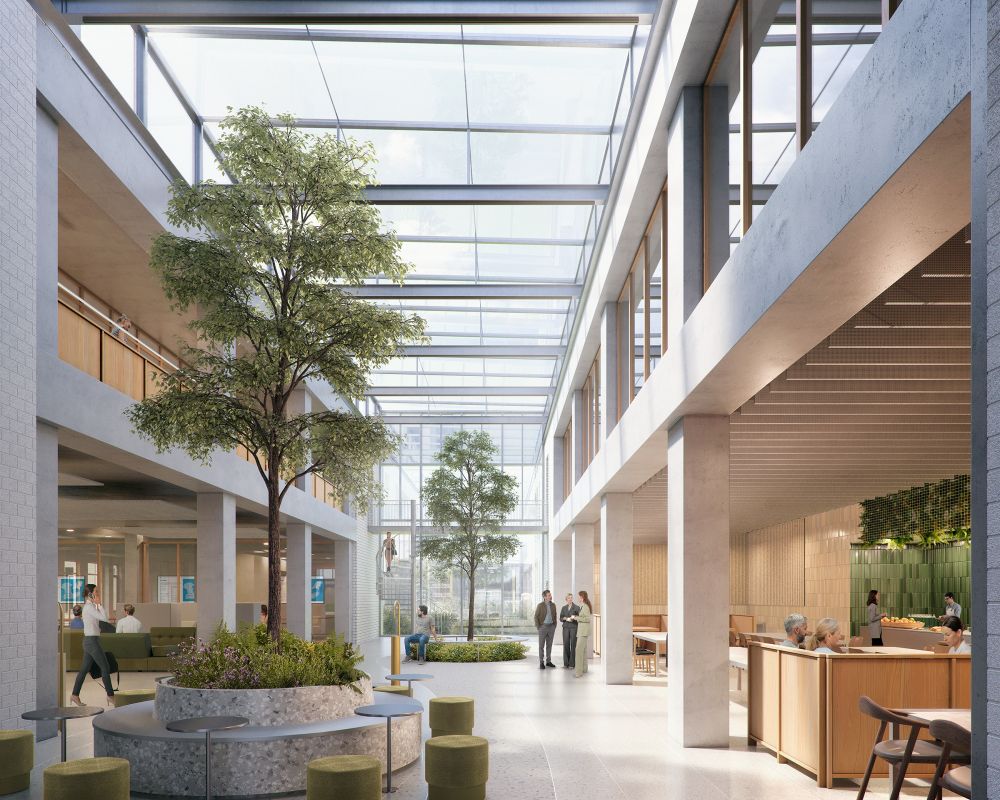
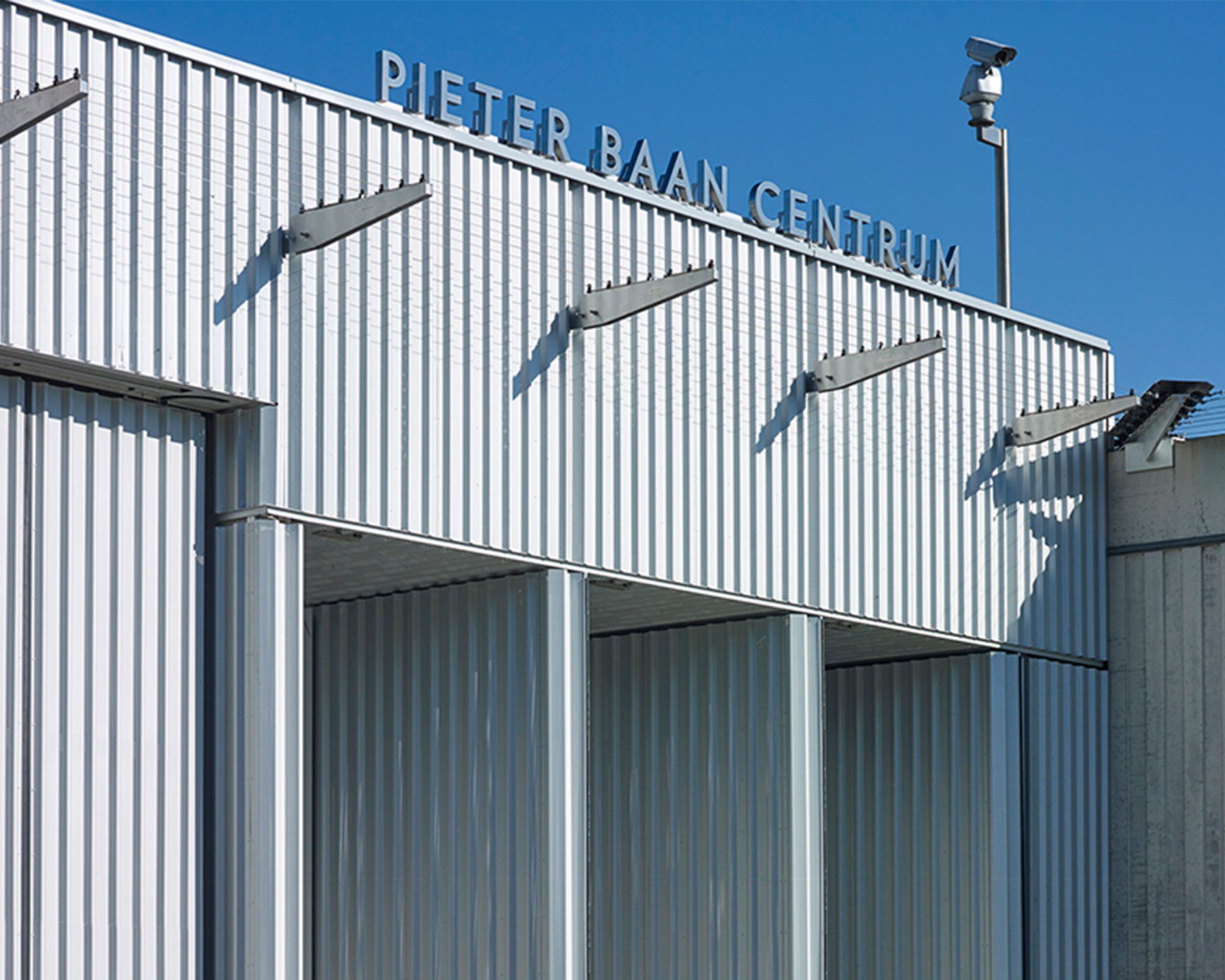
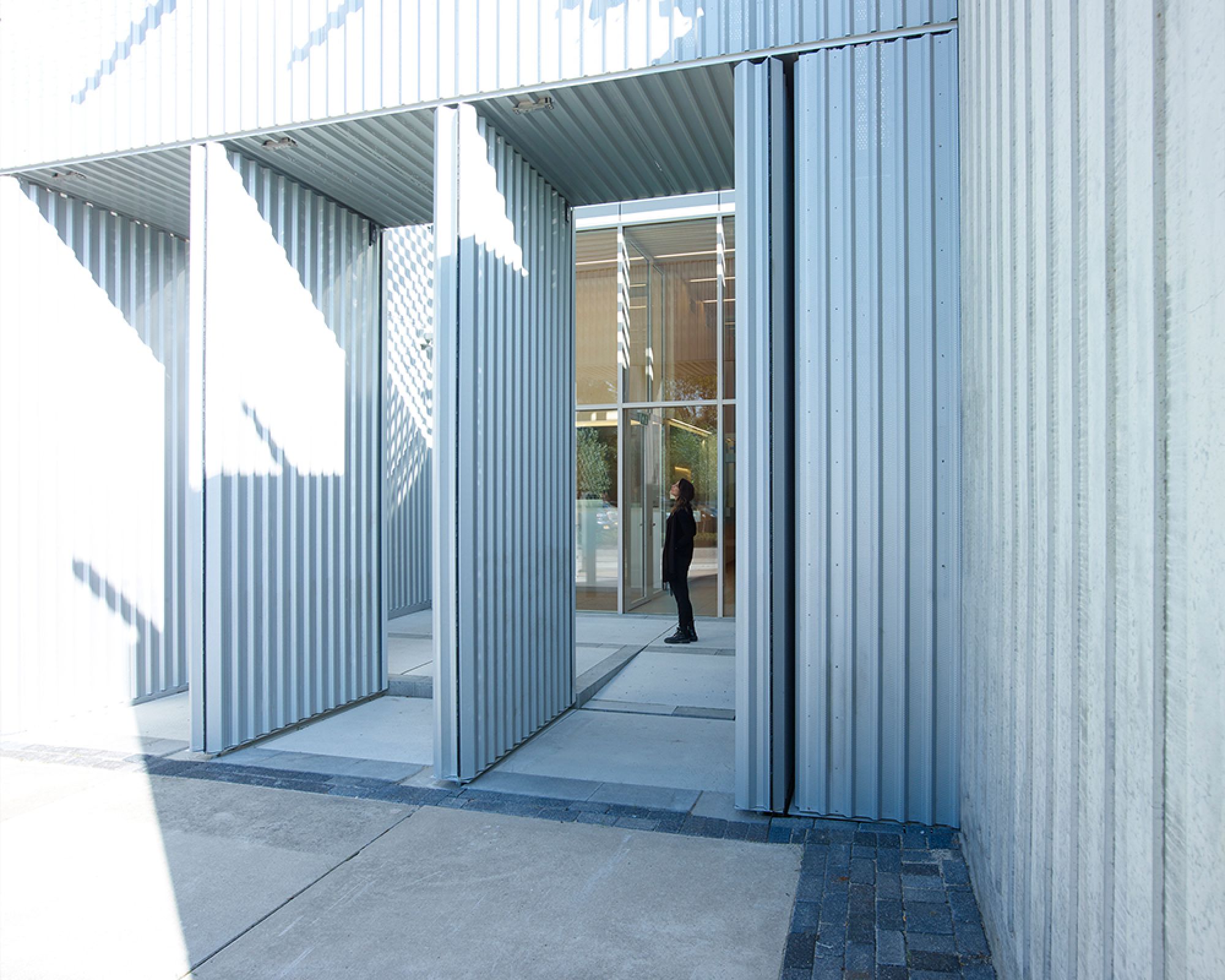
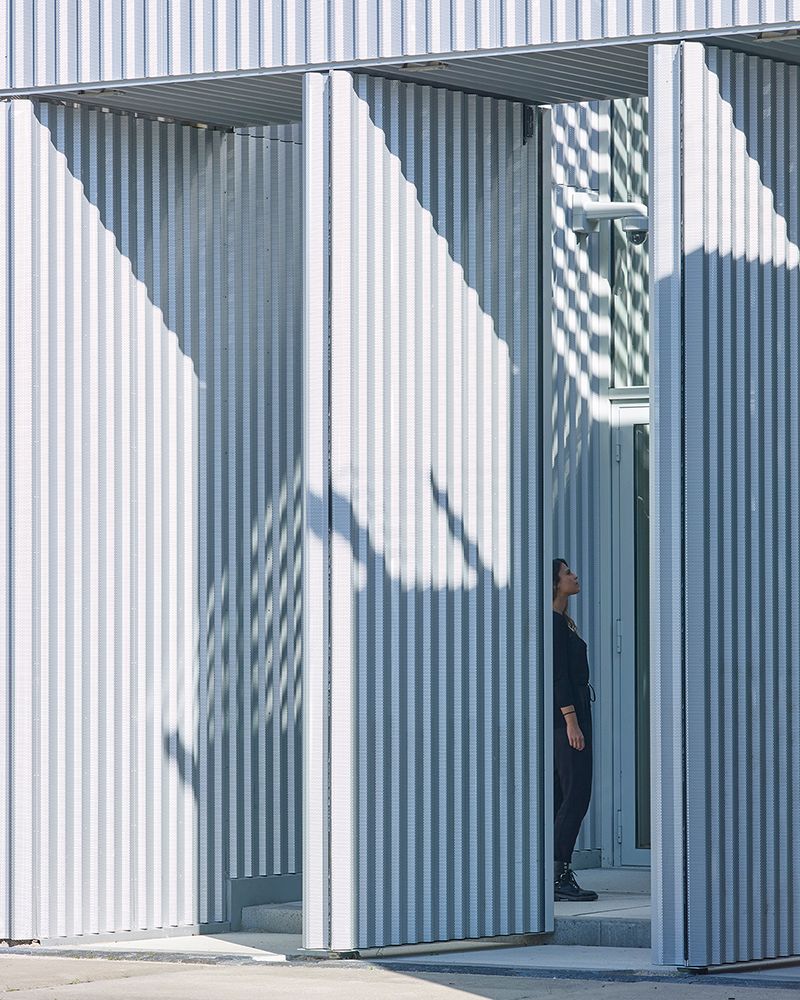
The entrance building is conceived as a distinct, luminous landmark within the newly established perimeter of the Oostvaarders clinic. Three monumental doors mark the approach, guiding visitors through a carefully orchestrated sequence of spaces that subtly communicate the crossing of a security threshold. This choreography of movement ensures that the experience of entering the complex is legible, calm, and dignified, balancing the institutional requirements with human perception.
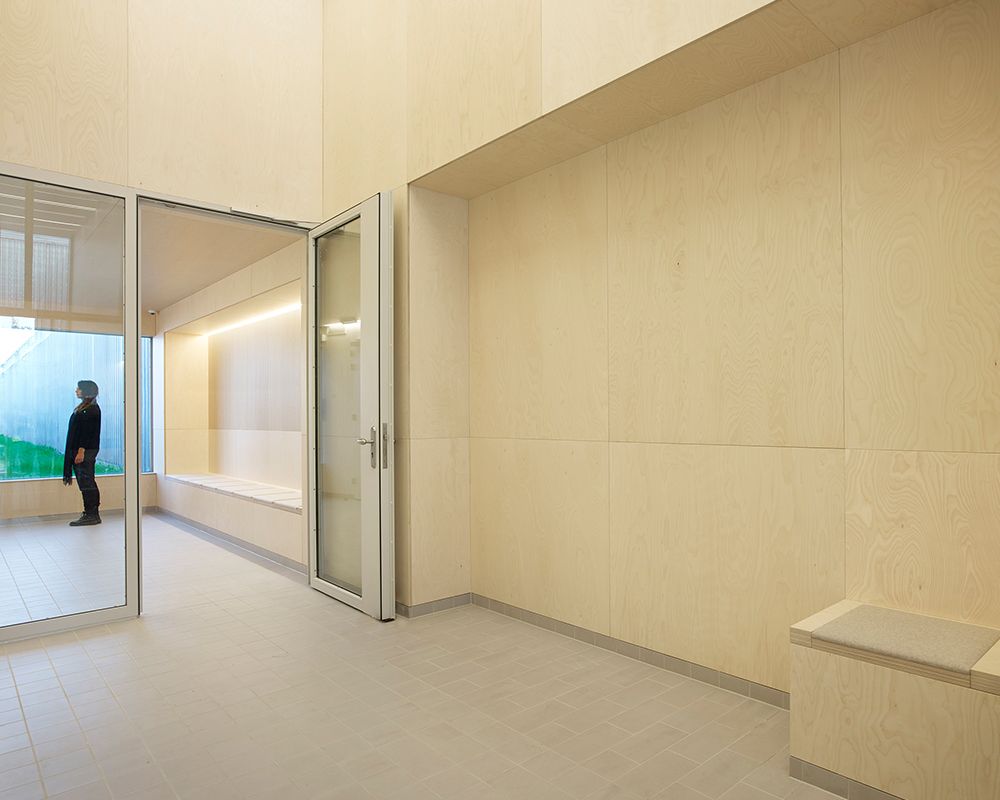
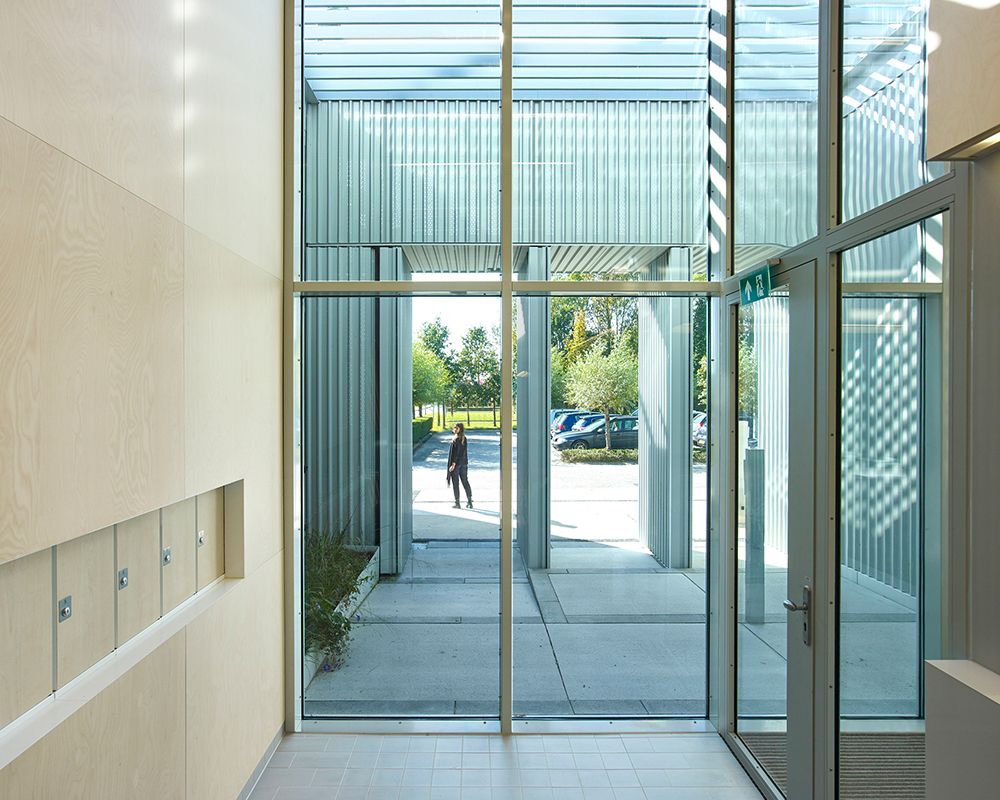
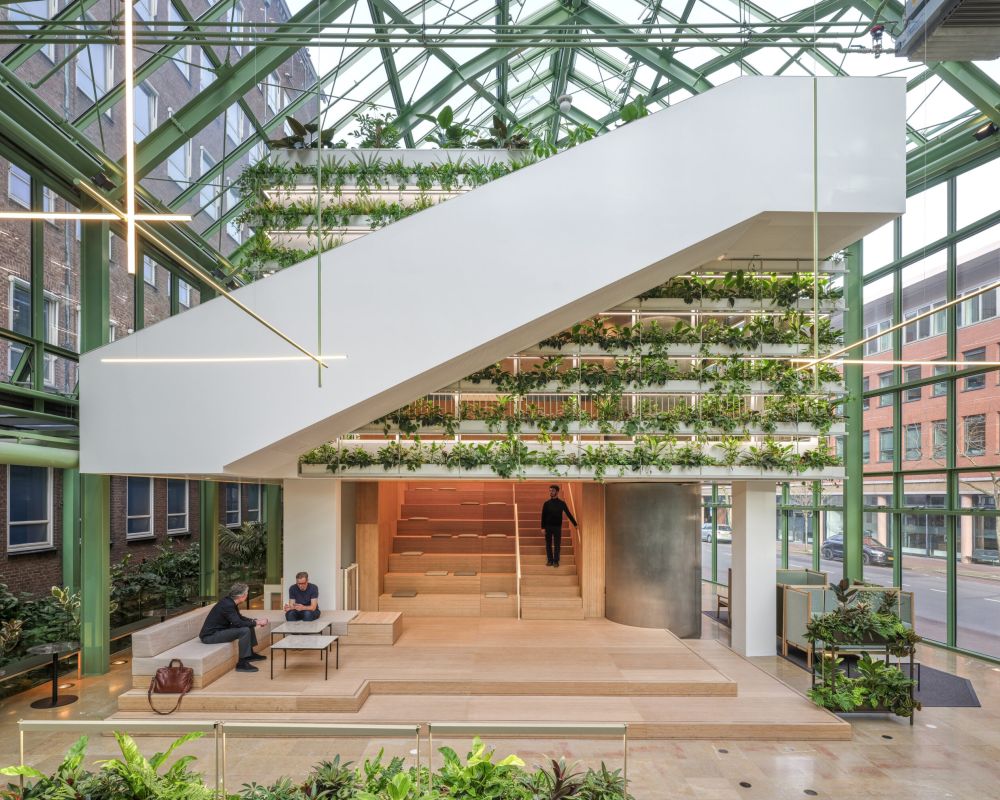
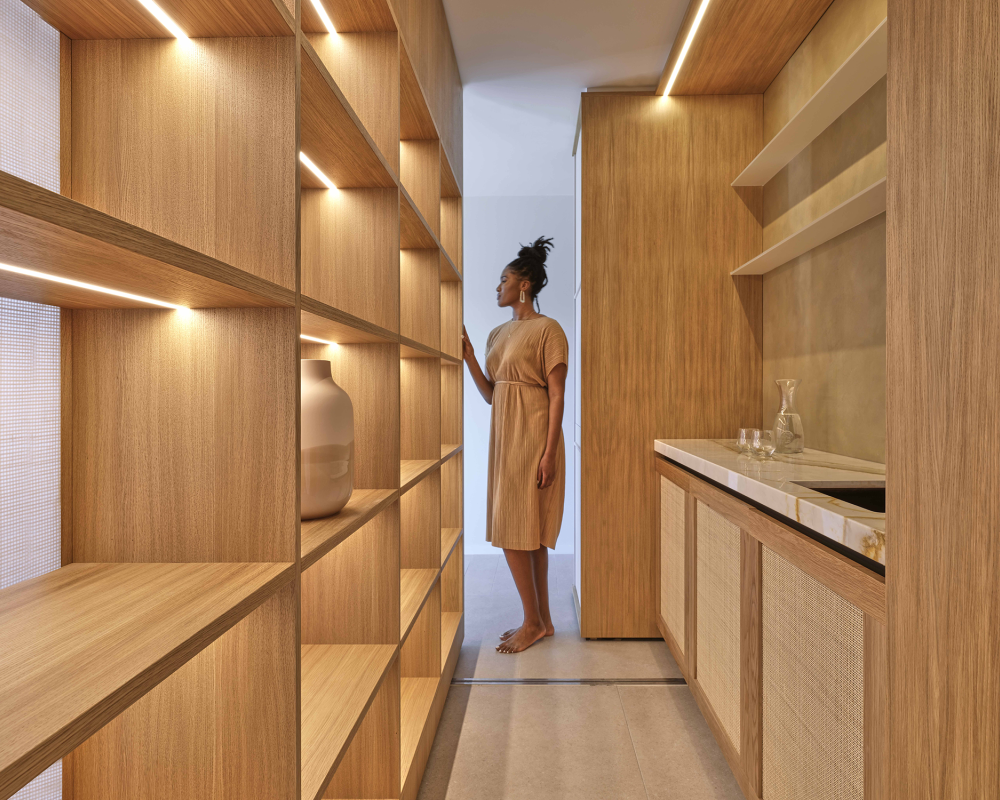
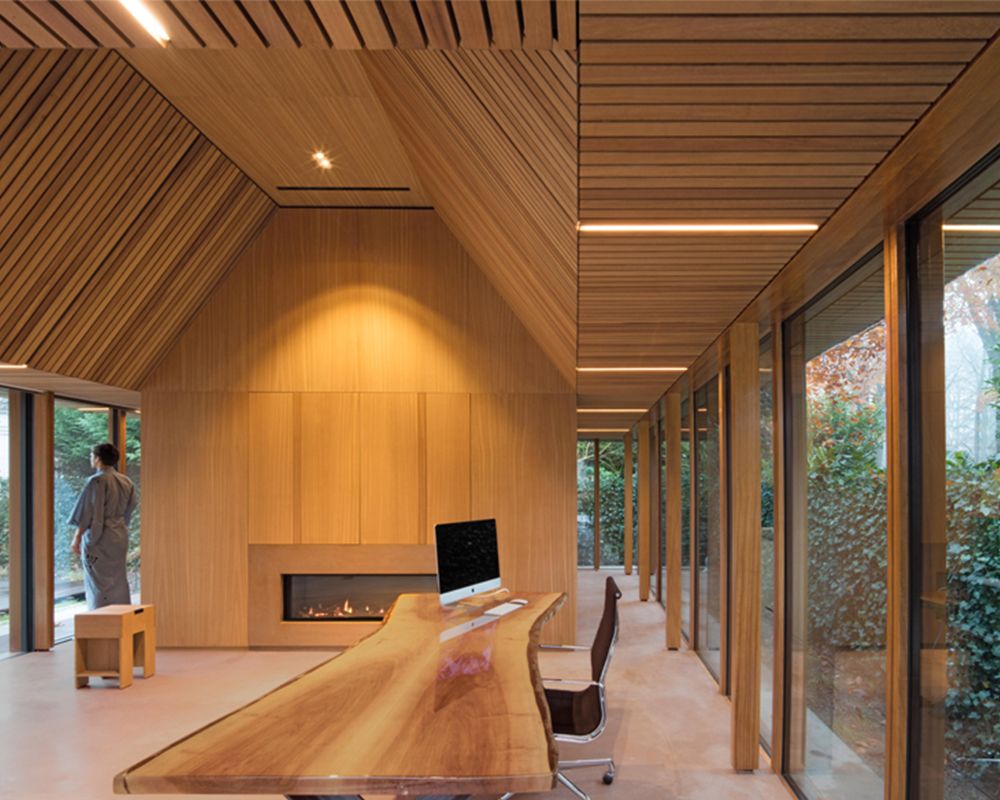
Inside, the building opens into a light-filled and serene environment. Natural daylight floods the space, emphasizing clarity and openness, while carefully considered materials and textures contribute to a sense of warmth and reassurance. The interior is organized around a central spine, created by a custom-designed, integrated wooden furniture element that structures the flow of the building. This piece not only organizes circulation but also provides functional zones, subtly connecting different programmatic areas without interrupting the visual continuity.
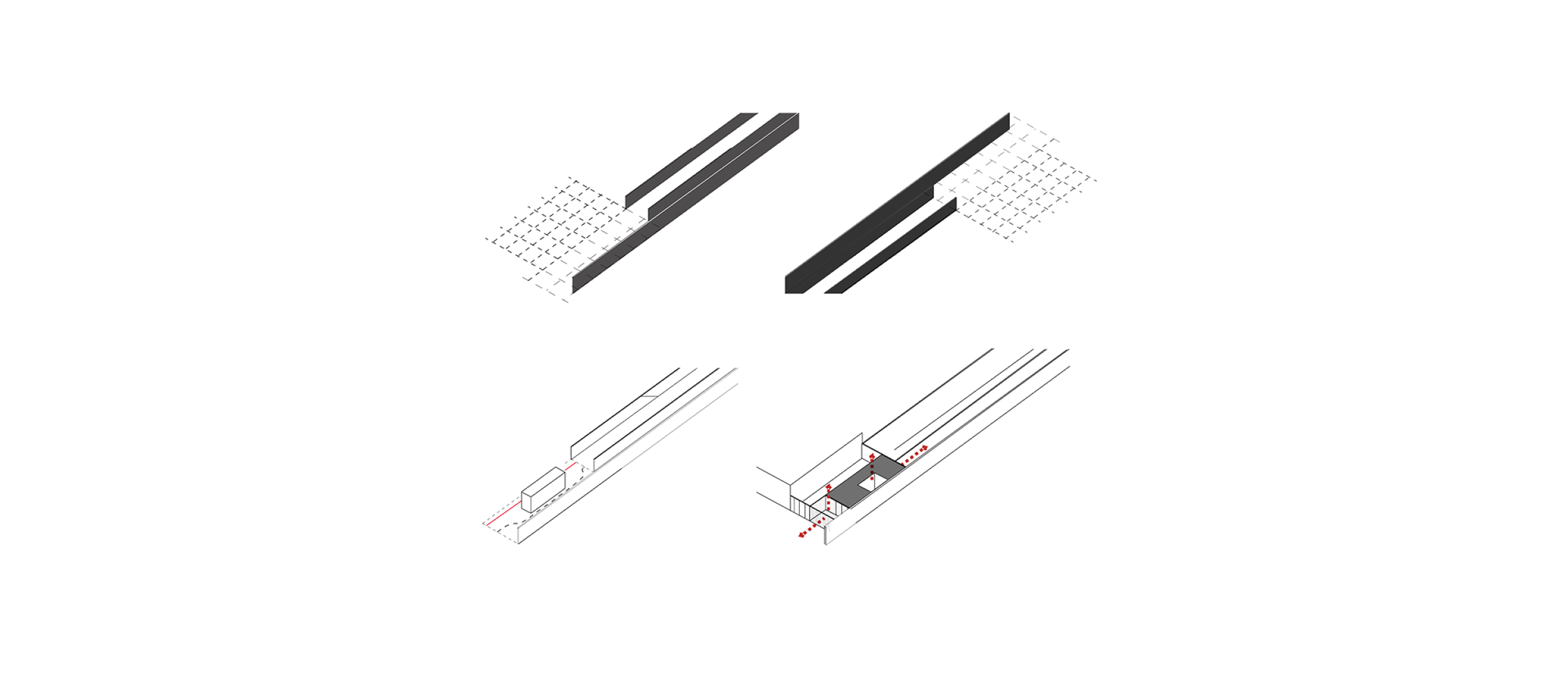
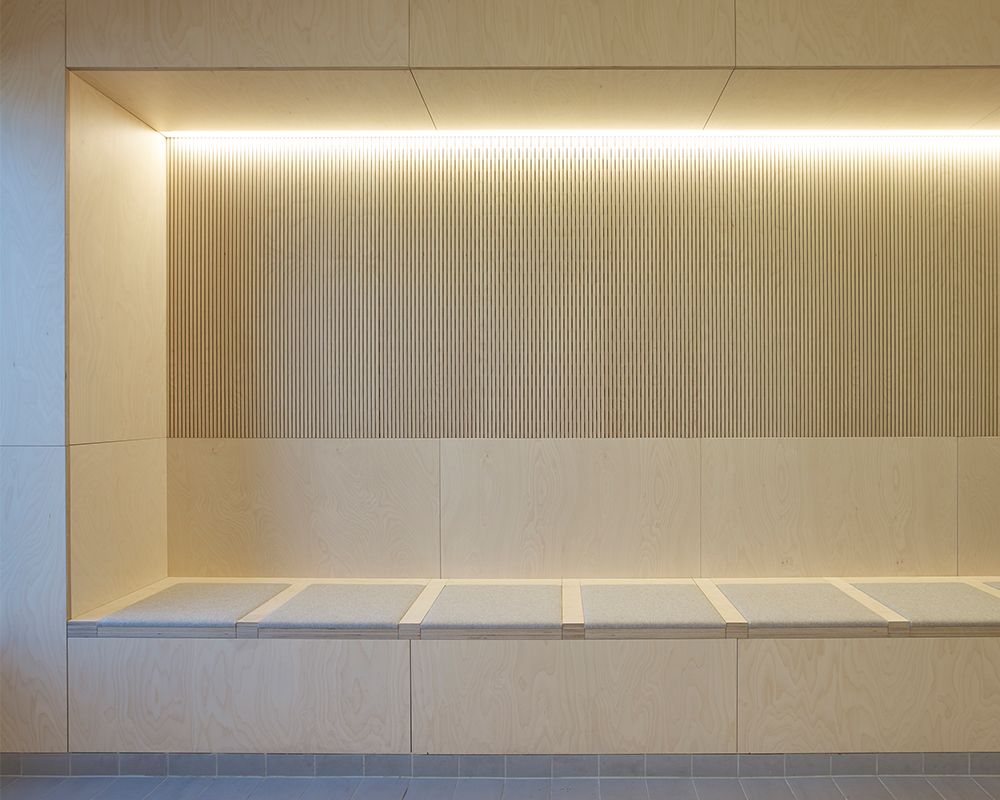
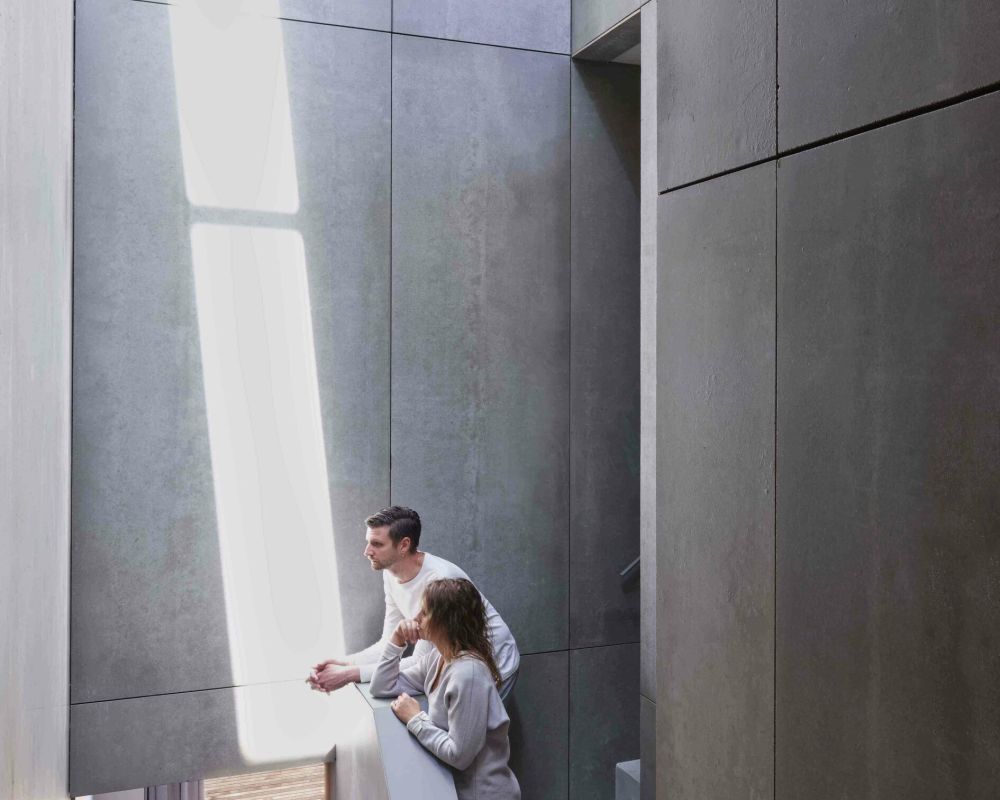
The wooden spine culminates in the waiting area, where it merges with the space and directs the gaze toward the clear zone and the expansive security wall beyond. The interplay between the warm, tactile interior materials and the austere exterior environment heightens the perception of transition, reinforcing the entrance as a serene threshold. Through this combination of light, materiality, and spatial clarity, the building creates a calming, human-centered experience at the interface between public access and institutional security.
Framing the experience
This wooden spine culminates in the waiting area, where it becomes an integral part of the space. From here, a panoramic view opens toward the clear zone and the seemingly endless security wall beyond. The contrast between the warm interior materials and the austere exterior infrastructure heightens the spatial experience, positioning architecture as a mediator between human scale and institutional requirements.